A Brief History of Mathmos and the Lava Lamp
The Inventor and the Idea
The lava lamp was the creation of Edward Craven Walker, a British inventor and filmmaker with a talent for unconventional thinking. The story, as it is often told, begins in a pub — specifically with a peculiar egg-timer contraption Craven Walker noticed bubbling away on a bar, reportedly made from a cocktail shaker filled with liquids. Whatever truth lies in that origin, the image clearly lodged itself in his imagination. Through the late 1950s and into the early 1960s, he refined the concept, working out how to suspend blobs of wax inside a liquid-filled glass vessel so that they would rise and fall with the heat of a bulb below.
In 1963, he launched the product commercially under the name Astro Lamp, through a company he co-founded called Crestworth, based in Poole, Dorset. The design was patented, and the lamp was an immediate curiosity — something genuinely difficult to categorise. Was it art? A novelty? A piece of furniture? That ambiguity turned out to be part of its appeal.
From Crestworth to Mathmos
Crestworth traded through the 1960s and 1970s, riding the cultural wave that made the lava lamp an icon of the psychedelic era. The slowly morphing blobs felt perfectly suited to an age preoccupied with fluid forms and altered perception. Sales spread internationally, with licences issued to manufacturers in the United States and elsewhere. By the 1980s, however, the lamp had drifted into the territory of kitsch — admired with a certain ironic distance, perhaps, but no longer at the centre of anything.
The company changed hands in 1989, when Cressida Granger and David Mulley acquired the business and renamed it Mathmos — a word borrowed from a 1968 science-fiction film, Barbarella, in which a bubbling underground substance powers the city of Sogo. Under new ownership, Mathmos pursued quality rather than volume, repositioning the lava lamp as a considered design object rather than a throwaway novelty. This shift proved well-timed. The 1990s brought a renewed appetite for retro aesthetics, and the lava lamp found a second generation of admirers.
Design Milestones and Lasting Icons
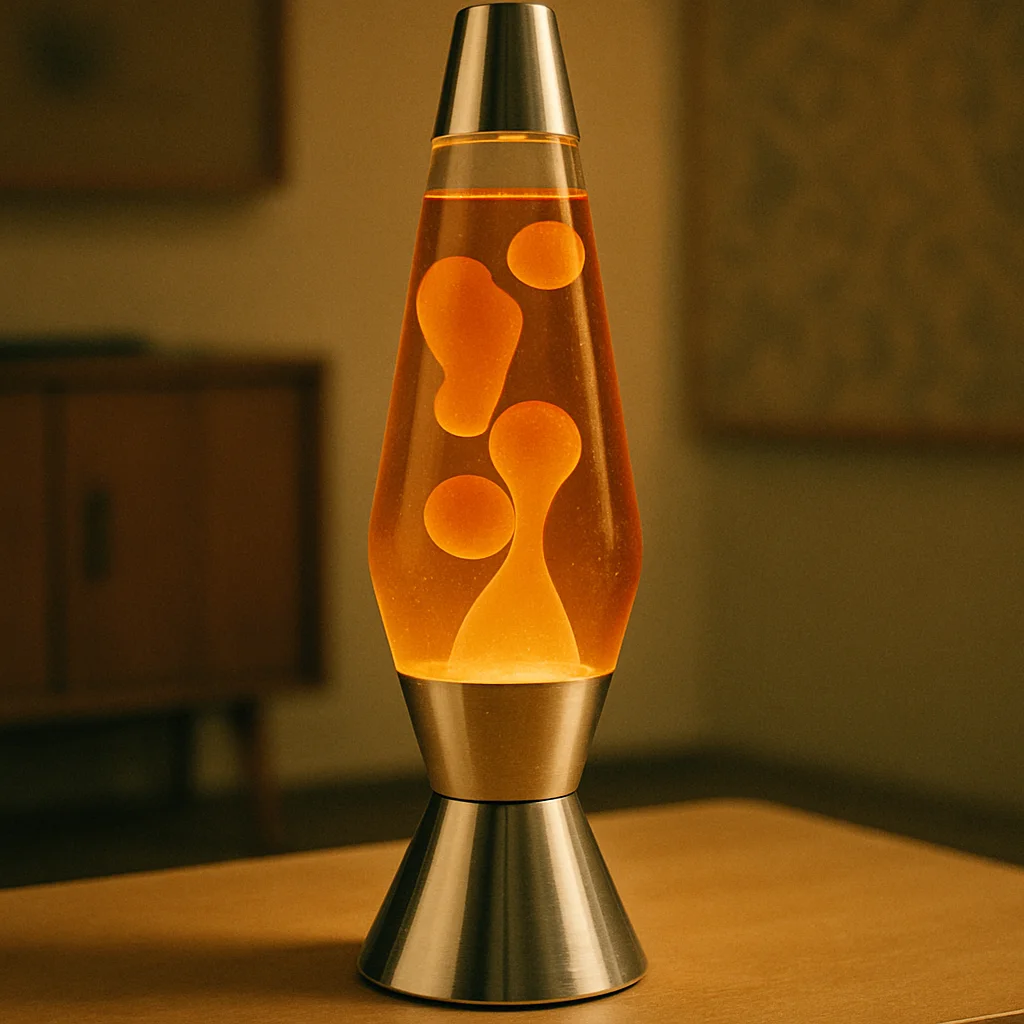
Mathmos retained the original Astro design — the tapered rocket-shaped base that Craven Walker had developed — and built a family of models around it over the following decades. New shapes arrived over the years, each with its own character: taller, more architectural forms; smaller desk-friendly versions; lamps with coloured metal bases or translucent vessels that changed the quality of the light entirely. Some models were produced in limited runs; others became long-running staples.
Throughout this period, Mathmos kept manufacturing in the United Kingdom, which distinguished it from the many cheaper imitations that flooded the market during the 1990s lava lamp revival. The chemistry of the wax and fluid — the precise formulation that produces the right density relationship at the right temperature — remained the core of what Mathmos protected and refined. Getting that balance right is genuinely difficult, which is part of why so many imitations disappoint. There is more on this in the fluid and wax chemistry article if you want to understand what is actually happening inside the globe.
A Living History
Craven Walker died in 2000, but the lamp he developed continues to be produced in essentially the same form he envisioned. That continuity is remarkable for any consumer product. Mathmos has outlasted countless trends and competitors, which says something about the particular satisfaction of watching something slow, warm, and purposelessly beautiful.
If you are trying to identify which specific Mathmos model you own, or to date a lamp from its design details, the model identification guide is the natural next step. And for anyone curious about how Mathmos lamps compare to the wider world of lava lamp ownership, the beginner’s guide offers a broader introduction to the subject.